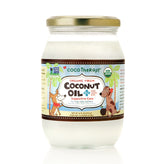



















If you’ve ever tried to pick coconut oil for your dog or cat, you’ve probably noticed how confusing it can be. Two jars can look almost identical, use the same buzzwords (like “virgin” or “cold pressed”), and still perform very differently once you start using them.
That’s because coconut oil isn’t just “a fat.” Its functional value depends on how the coconuts were harvested, how quickly they were processed, and whether heat was used during extraction.
Each of these factors is critical: harvest timing affects the development of fatty acids, processing speed determines freshness, and heat exposure can impact the integrity of MCTs and lauric acid levels.
And those variables shape what you actually care about as a pet parent: digestibility, aroma and taste, consistency, and how your pet responds.
In this guide, we’ll break down what separates high-quality coconut oil from average oil, what to look for on labels, and how to choose the right type based on your goal. By the end, you’ll know exactly how to find the best coconut oil for your furry friend.
In this guide:
- Why Coconut Oil Quality Matters for Pets
- Veterinarian Insights on Coconut Oil Quality for Dogs and Cats
- Cold-Pressed vs Refined Coconut Oil: What Pet Owners Should Know
- How to Read a Coconut Oil Label for Pets
- Signs of Low-Quality Coconut Oil
- If You Want to Go One Step Further: Match the Oil to the Goal
- How to Use Coconut Oil for Dogs and Cats
- Final Takeaway: Quality Determines Function
- Want the Full Scientific Breakdown?

Why Coconut Oil Quality Matters for Pets
It’s easy to think of coconut oil as interchangeable from brand to brand, especially when the jars look the same. But when it comes to our pets, quality matters. And coconut oil is a perfect example of why the source and processing can make all the difference.
The same label terms can cover very different products, and those differences can influence both the benefits and how well your pet tolerates the oil.
The Difference Between Calories and Functional Fats
All fats have calories, but not all fats are created equal. The real question is, how do those fats work inside your dog or cat’s body?
Most dietary fats are long-chain fats. They have to go through a slow, complex process to be broken down, packaged, and transported through the body before they can be used for energy.
Medium-chain triglycerides, or MCTs, are different. These fats follow a much shorter path. They’re absorbed quickly and go straight to the liver, where they become a ready source of energy.
This is exactly why coconut oil is so special. It’s naturally rich in MCTs like caprylic, capric, and lauric acids. When the coconut oil is fresh and processed with care, these beneficial fatty acids stay intact and active.
So, coconut oil is not just another fat. It functions in a unique way that can support your pet’s overall health.
Want a simple breakdown of how MCTs differ from other fats and why it matters for your pet? Check out our full guide to learn more:
A Guide to Medium-Chain Triglycerides
How Degraded Oil Can Lose Beneficial Compounds
The quality of coconut oil all comes down to how it's made. Things like when the coconut is harvested, how quickly it's pressed, and whether it's exposed to heat all make a big difference.
If an oil is processed too harshly or stored improperly, it can start to break down. It might still look okay in the jar, but its chemical makeup changes for the worse. This means you can lose the natural compounds that keep the oil stable and fresh.
So, why does this matter? A study on Antimicrobial effects of virgin coconut oil and its medium chain fatty acids on Clostridium difficile found something pretty interesting. The whole coconut oil itself didn't stop bacterial growth. But once that oil was broken down into its fatty acids, especially lauric acid, it did.
What does that tell us? It's not just about the oil in the jar. It's about what your pet's body can actually use after digesting it. This is why the quality of those fatty acids is so important.
Did you know there can be a huge difference in taste too? In fact, Dr. Judy Morgan once did a blind taste test comparing CocoTherapy Virgin Coconut Oil to another brand. She said ours tasted bright and fresh, while the other was muted and almost petroleum-like. They looked the same, but they were very different inside.
Freshness isn't just a marketing gimmick. It's everything. It directly affects the quality of the fatty acids and how your pet will benefit from the oil. That's why we talk about farm to bottle control and cold processing. These aren't just buzzwords – they're how we protect the good stuff that makes coconut oil work.
Why Pets Are Often More Sensitive to Ingredient Quality
Pets are great at showing us the truth fast. Their digestive systems are small, their diets are simple, and even small changes in fat quality can make a big difference. This means that you may notice signs like softer stool, coat changes, itching, or lower energy.
If someone says, “coconut oil didn’t work for my pet,” it’s a good idea to ask a few questions. How was it processed? Was it fresh? How much was given? Sometimes the problem isn’t coconut oil itself but the quality of the oil or how it was used.
If you’re wondering why two jars of coconut oil that look the same can act so differently, check out our guide on medium-chain fatty acids. It explains the science in plain English and connects it to what you actually see in your pet.
Veterinarian Insights on Coconut Oil Quality for Dogs and Cats
When you're choosing coconut oil for your pet, it's a good idea to get an expert opinion. You'll want to hear from a veterinarian who really gets the details, like sourcing, fatty acid quality, and processing methods.
That's why we love this chat between Dr. Judy Morgan and our very own coconut oil expert, Charisa Antigua, whose family has been making coconut oil for three generations on their farm in the Philippines.
Check out the video to find out what really matters when you're looking for a high-quality coconut oil. You'll learn why things like harvest time, cold-press methods, and quick processing are so important for preserving all the good stuff, like lauric acid. They also explain why labels like "virgin" or "organic" don't always tell the whole story about quality.
Key Expert Insights from the Interview
If you'd like a quick, practical summary, this table captures the key takeaways from the discussion, along with why each one matters when you’re evaluating coconut oil for pets:
|
Topic |
Dr. Judy Morgan Highlights |
Why It Matters for Coconut Oil Quality |
|
Harvest Timing |
“The key is to harvest it when the coconut is a year old. If you harvest it early, the nutrients aren’t fully developed.” |
Coconuts harvested at around 12 months have a fully developed fatty acid profile, including lauric acid and other medium-chain fatty acids. Immature harvests may produce oil, but not the same nutrient density. |
|
Processing Speed |
“You have to process the coconuts within 24 hours, or they’ll start to ferment or go rancid.” |
Once opened, coconuts begin to oxidize. Rapid pressing helps preserve freshness and fatty acid integrity before degradation begins. |
|
Extraction Method |
Discussion of cold-pressed vs expeller-pressed methods. Expeller pressing may involve higher heat, sometimes 145-200°F depending on equipment. |
Excess heat can affect flavor and potentially alter sensitive compounds. Cold-pressed extraction minimizes heat exposure and better preserves structure. |
|
‘Virgin’ Label Differences |
“There’s such a huge difference. One tasted like coconut. The other tasted like petroleum.” |
Two oils can look identical and both be labeled “virgin,” yet differ significantly in freshness and processing. Flavor often reflects how the oil was handled from harvest to bottle. |
Cold-Pressed vs Refined Coconut Oil: What Pet Owners Should Know
If you’ve ever seen two jars of coconut oil and thought, they look the same, so they must be the same, this section will clear things up.
The main difference comes down to how they're made. These steps can change the oil's texture, smell, and how well it works for your pet.
So, what’s the deal with cold-pressed coconut oil? Unlike other methods, it’s made using very little heat. The process gently separates the oil from fresh coconut milk, preserving its natural goodness every step of the way.
And what about refined coconut oil? This type usually goes through a more intensive process. It's often made with high heat and extra steps, sometimes using chemicals, to extract the oil. This extensive processing strips away the natural coconut scent and flavor.
Here's a quick overview of the key differences:
|
Feature |
Cold-Pressed Coconut Oil |
Refined Coconut Oil |
|
Heat exposure |
Low |
High |
|
Nutrient retention |
Higher |
Lower |
|
Processing |
Hand pressed, mechanically without heat |
Chemical and/or heat-based, expeller-pressed |
|
Flavor and smell |
Fresh, coconutty smell, slightly nutty, sweet taste |
Neutral or altered |
If you’re choosing coconut oil specifically for MCTs and functional support, cold-pressed and unrefined is usually the safer bet. Also, keep in mind that coconut oil refined with chemical solvents like hexane cannot be labeled as true "virgin" coconut oil.
If you’re the kind of person who wants the full nerdy explanation (and honestly, it’s worth it), this post goes deeper on virgin vs refined vs unrefined and how processing changes the final oil: What Are the Differences Between Virgin, Refined, and Unrefined Coconut Oil?
How to Read a Coconut Oil Label for Pets
So, how do you spot the good stuff? It's all in the label, but you have to know what you're looking for. Don't fall for fancy marketing language. Instead, look for clues that show the brand cares about things like sourcing, freshness, traceability, and keeping those healthy fatty acids intact.
Here's a short checklist to help you:
- Is it USDA-certified organic?
- Is it NON-GMO Verified?
- Is it unrefined and cold-pressed?
- Is the sourcing transparent (country, farms, process)? It should come from one country, not a mix of multiple countries.
- Do they reference fatty acid testing or lauric acid percentage?
- Does it have a specific Lot # for that batch of coconut oil? Exceptional coconut oil is traced from farm to bottle, and it can only be done if a Lot # is on the bottle.
The label doesn’t always tell you everything. To learn more about your coconut oil brand, contact the manufacturer and ask about their processing. You can also request a Certificate of Analysis (COA), which should be available for every batch.
Signs of Low-Quality Coconut Oil
A jar can still look clean and white and be low quality, which is why it helps to know the red flags. This is one of those times when your senses and a little label skepticism can save you a lot of trial and error.
Watch for:
- Stale, smokey, or sour odor
- Bland, muted flavor, or that weird petroleum-ish note people sometimes describe
- Vague sourcing claims (no farm, no region, no process details)
- No certifications (especially if it claims “organic” loosely) – no organic certifier listed from an National Organic Program (NOP) certifier or non-GMO verified seals,
- No processing transparency (no mention of cold-press, extraction method, or speed)
- No Lot # – needed for traceability
If your pet suddenly has softer stool, itchier skin, or just seems off after you've added coconut oil, the quality of the oil could be the reason.
If You Want to Go One Step Further: Match the Oil to the Goal
Once you know the importance of quality, the next step is picking the right type of oil for your pet’s needs. Some pets do well with an all-around, full-spectrum oil, while others need more specific support like energy, brain health, or yeast care.
For a versatile, full-spectrum option, CocoTherapy Organic Virgin Coconut Oil is a great choice and works for most pets. If you’re looking for something tailored to energy, brain support, or yeast care, go with Triplex MCT-3 Oil.
Picking high-quality coconut oil is one thing, but making sure it’s the right one for your pet is just as important.
Do you need an all-around virgin coconut oil? A concentrated MCT option? Maybe something with turmeric or functional treats to go with it?
Don’t worry, we’ve made it simple to figure out:
CocoTherapy’s Ultimate Product Guide for Pet Parents (Part 1)
CocoTherapy’s Ultimate Product Guide for Pet Parents (Part 2)
How to Use Coconut Oil for Dogs and Cats
Once you’ve picked a good oil, the next step is how you introduce it. Coconut oil is gentle for most pets, but it’s still a fat, so it’s best to add it slowly. Starting slow helps avoid upset stomachs and makes it easier to figure out the right amount for your pet.
Here are some simple guidelines on how to use coconut oil for your furry friends:
As a Food Supplement
Start small by mixing a little into their food. Use a pea-sized amount for smaller pets or about 1/4 teaspoon to start. If they handle it well, you can slowly increase it over a few days. Taking it slow helps their digestion adjust without any issues.
For more details on portions, safety tips, and when to stop, check out our full guide for dogs here:
Coconut Oil for Dogs: The Ultimate Guide for Healthy and Happy Pets
https://www.cocotherapy.com/blogs/news/coconut-oil-for-dogs-the-ultimate-guide-for-healthy-and-happy-pets
And for cats, including hairballs, digestion, and daily use tips, see:
Is Coconut Oil Safe and Healthy for Cats in 2026?
https://www.cocotherapy.com/blogs/blog/coconut-oil-for-cats-2026
For Skin and Coat Support
Did you know you can use coconut oil directly on your pet’s skin? Just warm a small amount between your fingers and gently massage it into any dry or irritated areas. Remember, a little goes a long way! It's great for things like dry patches, flaky skin, or even just to give their coat a healthy shine.
Want to learn more about how it helps with shedding, hotspots, and yeast? Our step-by-step guide has you covered: 6 Ways Coconut Oil Promotes Skin and Coat Health
For Paw Care and Minor Irritation
Put a thin layer on dry paw pads, noses, or small scrapes. Keep your pet busy after so it has time to soak in.
If your pet’s irritation is seasonal, allergy-related, or linked to fleas and ticks, this guide explains how coconut oil supports the skin barrier and helps protect against common triggers: How Coconut Oil Protects Your Pet from Allergies and Pests
Storage and Shelf Stability
Wondering how to store your coconut oil? It's simple.
A good quality coconut oil is naturally shelf stable, so it doesn't need to be refrigerated as long as it's been processed and sealed properly. Just keep it in a cool, dry place and out of the sun. If it smells fresh with a light coconut scent, you know it's good to go.
Final Takeaway: Quality Determines Function
It’s easy to judge coconut oil by how it looks in the jar, but that’s not where the real differences are. What really matters is how mature the coconuts are when they’re harvested, how quickly and cleanly they’re processed, and how gently the oil is extracted to keep its natural benefits.
Remember, high-quality coconut oil should be:
- Harvested at peak maturity
- Processed quickly after opening
- Cold-pressed, not heat-extracted
- USDA-certified organic
- Non-GMO verified
- Transparent in sourcing and fatty acid integrity
Without these standards, coconut oil is just another fat in your pet's bowl.
But with them, it's so much more. It's a powerful ingredient that helps with digestion, keeps their skin healthy, supports their immune system, and gives them steady energy.
So, if you see two jars of coconut oil that look the same on the shelf, remember the real difference isn't the color or texture. It's how the coconuts were grown and handled every step of the way, from the farm to the bottle.
When you choose a high-quality oil, your dog or cat will feel the difference.
Want the Full Scientific Breakdown?
Ready to dig into the science? If you're still reading, you're probably the kind of pet parent who wants real evidence, not just marketing claims.
That's why we've gathered all the important peer-reviewed research on coconut oil, MCTs, lauric acid, and their effects on digestion, brain health, metabolism, and the immune system. The result? A simple, easy-to-read scientific guide:
The Science Behind CocoTherapy: Your Exclusive Gateway to Scientific Research Articles
Simply enter your best email address, and we’ll send it straight to your inbox.
Frequently Asked Questions About Coconut Oil for Pets
We get a lot of questions from pet parents just like you. So, we've put together the most common ones with simple answers that focus on what really matters: quality, safety, and how to use coconut oil in the real world:
What is the best coconut oil for dogs?
The best coconut oil for dogs is USDA-certified organic, cold-pressed, unrefined, and transparently sourced. Look for mature-harvest coconuts, rapid processing, and preserved lauric acid and MCT levels. High-quality oil supports digestion, skin health, and energy better than heavily refined alternatives.
Is organic coconut oil better for pets?
Yes, organic coconut oil is usually a better choice because it lowers your pet's exposure to pesticides and means the oil was made under stricter rules. But "organic" on its own isn't the whole story. You also need to consider when the coconuts were harvested, if the oil was cold-pressed, and how fresh it is. All these things play a big part in the oil's quality.
Can coconut oil go rancid?
Yes. Coconut oil can oxidize if coconuts are processed too slowly, exposed to high heat, or stored improperly. Rancid oil may smell sour, stale, or petroleum-like. Fresh coconut oil should smell clean with a light coconut scent.
Does coconut oil help with yeast in dogs?
Lauric acid in coconut oil has been shown to have antimicrobial properties in lab studies. However, coconut oil should only be used as a support, not a replacement, for veterinary treatment for yeast infections. It’s also important to use high-quality oil and the right amount to see any benefits.
Can cats have coconut oil daily?
Some cats tolerate small daily amounts, especially when introduced gradually. Start with a tiny portion and monitor stool and appetite. If your cat has pancreatitis or is sensitive to fat, consult a vet before regular use.
References
Berk, B. A., Law, T. H., Packer, R. M. A., Wessmann, A., Bathen-Noethen, A., Jokinen, T. S., ... & Volk, H. A. (2020). A multicenter randomized controlled trial of medium-chain triglyceride dietary supplementation on epilepsy in dogs. Journal of Veterinary Internal Medicine, 34(3), 1244–1255. https://doi.org/10.1111/jvim.15756
Bhardwaj, V., Sharma, R., & Kumar, A. (2023). Antimicrobial potential of Cocos nucifera oil on bacterial isolates. Advances in Experimental Medicine and Biology. https://doi.org/10.1007/5584_2023_786
Chinwong, S., Chinwong, D., Mangklabruks, A., & Pratipanawatr, T. (2017). Daily consumption of virgin coconut oil increases HDL cholesterol levels. Evidence-Based Complementary and Alternative Medicine, 2017, Article 7251562. https://doi.org/10.1155/2017/7251562
Croteau, E., Castellano, C. A., Fortier, M., Bocti, C., Fulop, T., Paquet, N., ... & Cunnane, S. C. (2018). Ketogenic medium-chain triglycerides increase brain energy metabolism in Alzheimer’s disease. Journal of Alzheimer’s Disease, 64(2), 551–561. https://doi.org/10.3233/JAD-180202
Molina, S., Mori, F., & Packer, R. M. A. (2020). Efficacy of medium-chain triglyceride oil dietary supplementation in reducing seizure frequency in dogs with idiopathic epilepsy. Veterinary Record, 187(10), e56. https://doi.org/10.1136/vr.105410
Shilling, M., Matt, L., Rubin, E., Visitacion, M. P., Haller, N. A., Grey, S. F., & Woolverton, C. J. (2013). Antimicrobial effects of virgin coconut oil and its medium-chain fatty acids on Clostridium difficile. Journal of Medicinal Food, 16(12), 1079–1085. https://doi.org/10.1089/jmf.2012.0303
Vecchiato, C. G., Berlanda, M., Meineri, G., & others. (2023). Fecal microbiota, bile acids, sterols, and fatty acids in dogs with chronic enteropathy fed a home-cooked diet supplemented with coconut oil. Animals, 13(3), 502. https://doi.org/10.3390/ani13030502