



















Your pet’s skin puts up with a lot. Dry air, sunshine, dirt, licking, scratching, rough surfaces, and the occasional scrape are all part of everyday life.
Luckily, healthy skin has its own built-in ways of protecting itself and repairing minor damage. And keeping that natural barrier in good shape can make a real difference to how comfortable your furry friend feels.
In this post, we’ll look at how healthy skin protects and repairs itself, where virgin coconut oil can offer support, and what research tells us about moisture, the skin barrier, microbial balance, and wound healing. We’ll also cover a few simple ways to use coconut oil for everyday skin care and the signs that tell you it’s time to call your vet.
Healthy Skin Is Your Pet’s First Line of Defense
It’s easy to think of your pet’s skin as simply the surface that sits under their fur, but it actually has a much bigger job. Healthy skin forms a barrier that helps keep moisture inside while limiting exposure to dirt, irritants, and unwanted microorganisms.
That barrier is working around the clock, because your pet’s skin is constantly exposed to the outside world. If it becomes dry, irritated, or damaged, moisture escapes more easily and the surface becomes more vulnerable to further irritation.
So, how can you tell when your pet’s skin barrier is struggling? Start by looking for the early warning signs. You might notice dry paw pads, flaky patches, a rough nose, or a coat that looks duller than usual.
Persistent itching, redness, or recurring irritation can stem from many different causes, so it’s worth keeping an eye on those changes. We’ve explored some of these factors in our guide to itchy skin in dogs.
Once you know what to look for, the next step is helping that protective barrier stay comfortable, hydrated, and resilient. That’s one reason topical oils like coconut oil have attracted so much interest in skin care research.
How Does Skin Repair Itself After Minor Damage?
Skin has an impressive repair system. When the surface is damaged, the body gets to work quickly to protect the area and rebuild healthy tissue.
Inflammation is part of that early response. As healing continues, cells called fibroblasts help produce and organize collagen, one of the proteins that gives skin its strength and structure. Tiny new blood vessels also form to bring oxygen and nutrients to the area, while the outer surface gradually closes and repairs itself.
A few different things can affect how smoothly this process happens. The skin needs enough moisture, healthy blood flow, and a balanced environment where unwanted microbes don’t get out of control. The body also has its own antioxidant defenses that help protect cells during the healing process.
This is where some of the research into virgin coconut oil (VCO) starts to get particularly interesting.

Coconut Oil and the Natural Healing Process
One frequently cited study published in 2010 looked at topical VCO during wound healing in young rats. Researchers created excision wounds and applied either 0.5 mL or 1 mL of VCO beginning 24 hours later for 10 days.
They then looked at several signs of healing, including how quickly the skin closed, changes in collagen, antioxidant activity, fibroblast growth, and the formation of new blood vessels.
The VCO-treated wounds closed more quickly and showed increased collagen cross-linking, greater fibroblast activity and the growth of more new blood vessels. Researchers also found lower lipid peroxide levels and changes in antioxidant activity in the treated wounds.
Put more simply, several parts of the normal repair process appeared to be more active in the groups treated with VCO.
This study gives us a useful look at how VCO may support several of the body’s natural repair processes. Because the research was carried out in rats, more direct clinical studies in dogs and cats would help us understand these effects more fully. Even so, the findings are encouraging and add to what we know about VCO and healthy tissue repair.
Coconut Oil and the Skin Barrier
Most skin care starts with something very simple: moisture.
The outer layers of healthy skin help slow the loss of water into the surrounding air. Researchers call this transepidermal water loss, or TEWL, but the idea itself is pretty straightforward. Healthy skin does a better job of holding onto moisture.
When the skin barrier isn’t working as well as it should, more water can escape and the skin may become drier and less comfortable.
Topical oils can coat and soften the skin surface, and human research suggests they may help reduce moisture loss. For pets, that’s especially relevant to areas that often become dry or rough, such as paw pads, noses, elbows, and other spots exposed to regular friction.
What a Clinical Study Found About Moisture Loss
A 2014 randomized, double-blind clinical trial compared topical VCO with mineral oil in 117 children with mild-to-moderate atopic dermatitis. Researchers followed the participants for eight weeks and looked at skin symptoms, moisture loss, and hydration.
The VCO group showed greater improvements than the mineral oil group across the measurements studied. Mean TEWL, which measures how much water escapes through the skin, dropped from 26.68 to 7.09 in the VCO group, while the mineral oil group went from 24.12 to 13.55.
Researchers also measured skin capacitance, which is simply a way of estimating skin hydration. Those measurements improved more in the VCO group as well.
Of course, dogs and cats aren’t small humans with extra fur. While this study looked at human skin affected by atopic dermatitis, the findings still give us useful insight into how VCO may support moisture retention and skin-barrier health. More pet-specific research will help us understand exactly how these benefits translate to dogs and cats.
Coconut Oil as a Moisturizer
Another randomized, double-blind study looked at a simpler question: how does coconut oil perform as a moisturizer?
The 2004 trial included 34 people with mild-to-moderate xerosis, which is the medical term for dry skin. Participants applied either coconut oil or mineral oil to their legs twice daily for two weeks.
Both oils significantly improved skin hydration and increased surface lipid levels, and coconut oil performed comparably to mineral oil overall. You can see the details in the 2004 moisturizing study.
For pet parents, the takeaway is pretty simple. Human research supports VCO as a moisturizer, and its ability to help soften and hydrate dry skin is one reason it’s often used on areas like paw pads, noses, elbows, and other rough spots. As with any topical product, it’s a good idea to start with a small amount and see how your pet’s skin responds.
And moisturizing is just one of the ways coconut oil can support your pet. From skin and coat health to digestion, energy, and overall wellness, VCO has plenty of other uses too. Take a look at our guide to the health benefits of coconut oil to learn more.
The Skin’s Microbial Balance
Your pet’s skin isn’t sterile, and that’s completely normal. Healthy skin naturally supports a community of microorganisms that live on its surface.
Problems can crop up when the skin barrier becomes irritated or damaged and certain microbes have more opportunity to grow. Keeping the skin healthy and intact helps support a more balanced environment.
Coconut oil contains several fatty acids that researchers have studied for antimicrobial activity. Lauric acid is especially interesting, and both lauric acid and a related compound called monolaurin have shown activity against certain microorganisms.
For everyday skin care, the useful idea here is balance. Research gives us some clues about how VCO may interact with microbes on the skin, but an actual infection needs proper treatment.
What One Study Found About Coconut Oil and Skin Bacteria
A 2008 double-blind controlled trial compared VCO with virgin olive oil in 52 adults with atopic dermatitis.
Researchers were particularly interested in Staphylococcus aureus, often shortened to S. aureus. This is a type of bacteria that can live on the skin and can become more common when the skin barrier is already irritated or damaged.
Twenty-six participants received VCO and 26 received virgin olive oil. Among the VCO group, 20 people tested positive for S. aureus at the beginning of the study. After four weeks, only one of those participants, or 5%, remained positive.
In the olive oil group, 12 started out positive and six, or 50%, remained positive after treatment.
This was another human study, so the findings don’t show that VCO treats bacterial skin infections in dogs or cats. They do add another useful piece to the research around coconut oil and the skin environment.
Want to dig deeper into coconut-related research? Check out our roundup of coconut oil studies.
Why Virgin Coconut Oil Is Useful for Everyday Skin Care
You may have noticed that the studies above keep mentioning virgin coconut oil (VCO) specifically. That detail matters.
VCO is a whole coconut oil containing a broad mix of naturally occurring fatty acids, with lauric acid making up a large proportion. It also contains smaller amounts of other coconut fatty acids, including caprylic and capric acid.
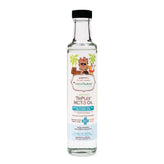
A concentrated MCT oil has a different fatty acid profile and is generally chosen for different goals. If you’ve ever wondered why the two aren’t interchangeable, our comparison of coconut oil and MCT oil explains the differences.
Processing can make a difference too. Research has found differences in things like phenolic compounds, antioxidants, sterols, and other components depending on how coconut oil is extracted and refined. If you’re putting an oil directly on your pet’s skin, it’s worth knowing how it was produced.
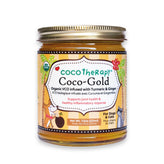
If you’re looking for a high-quality virgin coconut oil for your pet, check out our CocoTherapy Organic Virgin Coconut Oil. It comes from fresh coconuts grown on our family-owned, USDA-certified organic farm. Plus, it’s truly cold-pressed and unrefined, with no bleaching or chemical solvents, so you know exactly what’s going on your pet’s skin.
Our guide to choosing coconut oil takes a closer look at what separates a great coconut oil from the rest.
Simple Ways to Use Coconut Oil for Everyday Skin Care
If you decide to use coconut oil as part of your pet’s regular grooming routine, keep it simple. A little goes a long way, and starting with a small amount also makes it easier to see how your pet’s skin responds.
Here are some quick tips to keep in mind:
- Start with clean skin. Gently remove dirt or debris from the area before applying coconut oil. While you’re there, take a quick look for redness, swelling, broken skin, discharge, or anything else that seems unusual.
- Use a small amount. A thin layer is usually plenty for areas such as paw pads, elbows, noses, or small rough patches. Starting small also helps you avoid greasy fur and makes it easier to monitor your pet’s response.
- Massage it in gently. Use your fingertips to spread the oil over the surface without vigorous rubbing. This works especially well on paw pads and other dry-looking areas where you want a light, even coating.
- Watch the licking. Coconut oil tastes pretty good to many pets, so don’t be surprised if your dog decides your careful skin care routine is actually a snack. Use small amounts and keep an eye on excessive licking, especially if the skin is already irritated.
- Check the skin regularly. Keep an eye out for increasing redness, odor, swelling, discharge, pain, hair loss, or constant licking. Changes like these can be a sign that something more than everyday dryness is going on.
- Know when to call your vet. Deep wounds, punctures, burns, infected areas, severe itching, persistent sores, or injuries that aren’t healing normally need veterinary care.
When Coconut Oil Isn’t Enough
Dry paw pads after a long winter walk are very different from an open wound or a recurring patch of inflamed skin. The key is knowing when home skin care has reached its limit.
Ongoing scratching, hair loss, odor, discharge, repeated sores, or recurring skin infections can have underlying causes such as allergies, parasites, yeast or bacterial overgrowth, and hormonal or other health conditions. Moisturizing the surface won’t tell you what’s driving the problem.
Coconut oil also shouldn’t replace proper wound cleaning, prescribed antibiotics or antifungals, pain relief, sutures, or other veterinary treatment when those are needed. If an area looks painful, infected, deep, or simply isn’t improving as expected, your vet is the right person to take it from there.
Can Coconut Oil Help Your Pet’s Skin Heal Naturally?
Healthy skin is doing a lot of work every day, from holding onto moisture and protecting against outside irritants to repairing minor damage when it happens. Giving that natural barrier a little extra support can go a long way toward keeping your pet comfortable and their skin looking and feeling its best.
Research into VCO is encouraging, particularly when it comes to moisture retention, skin barrier support, and some of the processes involved in tissue repair. While there’s still more to learn about these effects in dogs and cats specifically, VCO can be a simple addition to your pet’s everyday grooming routine for dry-looking paws, noses, elbows, and other rough spots.
A little goes a long way, so start small and see how your pet responds. And if you notice ongoing irritation, pain, infection, or an area that just isn’t healing as expected, your vet can help you figure out what’s going on and get your furry friend feeling comfortable again.