



















If you’re adding coconut oil to your pet’s food, one question may be sitting in the back of your mind: since coconut oil is a fat, could it make your pet gain weight? It’s a reasonable concern, especially when maintaining a healthy body condition is such an important part of long-term wellness. But dietary fat is more complicated than simply counting how many grams end up in your pet’s bowl.
Research into coconut oil and medium-chain triglycerides (MCTs) suggests that these fats can influence energy use, body composition, glucose regulation, and insulin sensitivity in some interesting ways.
In this post, we’ll look at what the research actually shows and why medium-chain fats behave differently from many other dietary fats. We’ll also look at how to include them in your pet’s diet while keeping their overall calorie intake in balance.
Fat Doesn’t Automatically Equal Body Fat
It’s easy to think of dietary fat and body fat as basically the same thing. Your pet eats fat, the body stores it, and weight goes up. But in reality, there are several steps in between.
Body weight is influenced by the balance between the energy your pet takes in and the energy they use. Activity, age, muscle mass, hormones, metabolism, health conditions, portion size, and the rest of the diet all play a role. Treats, chews, toppers, table scraps, and supplements count too, even if they seem small compared with the main meal.
Coconut oil is still calorie-dense, so portions matter. If you add a generous amount to an already calorie-sufficient diet without adjusting anything else, those extra calories can contribute to weight gain.
Where things get more interesting is what happens after different fats are eaten. Fatty acids come in different sizes and structures, and the body doesn’t absorb, transport, and use all of them in quite the same way.
That’s why simply calling something “fat” doesn’t tell you the whole story.

Why Are Coconut-Derived MCTs Different from Many Other Fats?
Coconut oil contains a distinctive mixture of fatty acids, including caprylic acid, capric acid, and lauric acid, commonly known as C8, C10, and C12.
C8 and C10 are especially interesting because they can be absorbed relatively quickly and transported to the liver, where the body can use them for energy. They can also contribute to ketone production, giving the body another source of fuel.
Longer-chain dietary fats generally take a different route through digestion and transport before they’re available to tissues. That difference is one reason researchers have spent decades studying MCTs in relation to energy metabolism and body composition.
MCTs have also been studied for their effects on thermogenesis, which is simply the energy the body uses while processing nutrients. In practical terms, researchers want to know whether some medium-chain fats are more readily burned for fuel rather than being handled in exactly the same way as longer-chain fats.
If you want a deeper explanation of how they work, our guide to MCTs breaks down the differences without getting overly technical.
For this post, though, the more interesting question is what researchers have seen when they actually put those differences to the test.
What the Research Says About Body Composition
Body weight gets plenty of attention, but body composition can often tell us more.
Two pets can weigh the same amount and have very different proportions of muscle and body fat. That’s why researchers looking at metabolism often measure fat stores along with the number on the scale.
A 2019 study examined virgin coconut oil in mice eating a diet high in refined carbohydrates. That type of diet can encourage metabolic problems, including increased body fat and poor glucose control.
The mice receiving virgin coconut oil accumulated less body fat and showed improvements in several metabolic measurements. Researchers also saw changes in blood lipids, glucose regulation, and inflammatory markers.
That combination is interesting because it suggests the effects went beyond a simple change in body weight. The coconut oil was associated with broader differences in the way the animals were handling energy.
An earlier study in overweight rats compared medium-chain triglycerides with long-chain triglycerides. The rats receiving MCTs ended up with significantly less total body fat and smaller fat deposits. Their overall body weight was also slightly lower, while muscle protein content remained similar between the groups.
Of course, these studies weren’t carried out in household dogs and cats, so they shouldn’t be read as instructions to add coconut oil to an overweight pet’s bowl and expect weight to drop.
What they do show is much more useful: the type of dietary fat can influence how energy is used and stored.
That brings us to another part of metabolism that’s closely connected with body composition: insulin sensitivity.
Understanding Insulin Sensitivity
Insulin sensitivity may sound like something you only need to think about if a pet has diabetes, but it’s actually part of normal metabolism every day.
After your pet eats, carbohydrates and some other nutrients contribute to glucose entering the bloodstream. The pancreas releases insulin, a hormone that helps move glucose from the blood into cells, where it can be used for energy or stored for later.
When the body responds well to insulin, this system works efficiently. That’s what we mean by good insulin sensitivity.
When cells become less responsive, the body may need to produce more insulin to get the same job done. This is known as insulin resistance, and it can be influenced by factors such as excess body fat, diet, inflammation, hormonal changes, activity level, and underlying health conditions.
These things can affect one another, too. Metabolism, body composition, inflammation, and glucose regulation are all connected, which is why looking only at the number on the scale can miss part of the picture.
This connection has made MCTs especially interesting to researchers.
Can MCTs Support Better Insulin Sensitivity?
A 2016 study explored MCT supplementation in mice eating a high-fat diet. Researchers compared them with mice eating an isocaloric high-fat diet that used lard instead of MCTs as the main experimental fat.
The MCT group gained less weight and accumulated less body fat. Just as importantly for this topic, they also showed better glucose control and improved insulin sensitivity.
Researchers found lower inflammatory activity in the MCT-fed mice as well. That matters because ongoing metabolic inflammation can get in the way of normal insulin signaling, making it harder for cells to respond as they should.
The findings line up with the 2019 virgin coconut oil research we looked at earlier. In that study, mice eating a high-refined-carbohydrate diet also showed better glucose regulation after virgin coconut oil was added.
These were different studies using different diets, but they point in a similar direction. Virgin coconut oil and MCTs were associated with more favorable changes in several areas of metabolic health at the same time.
That doesn’t make MCTs an insulin treatment. What it does show is that researchers have good reason to keep studying how these fats affect the way the body handles energy and glucose.
For pet parents, it’s another reminder that metabolic health involves much more than simply eating fewer calories.
Virgin Coconut Oil and Blood Sugar Control
Most MCT research focuses on concentrated medium-chain fats, but whole virgin coconut oil has also produced some interesting findings.
A 2016 study compared virgin coconut oil with copra oil in rats eating a high-fructose diet. The rats receiving virgin coconut oil showed better glucose metabolism and more favorable glycemic conditions than those receiving the copra oil.
Researchers also saw improvements related to oxidative stress and liver health. That’s useful because metabolic health doesn’t happen in isolation. The liver plays a major role in managing glucose and dietary fats, while oxidative stress can affect how well cells function throughout the body.
The comparison between virgin coconut oil and copra oil is interesting for another reason: processing matters.
Virgin coconut oil retains its natural coconut fatty-acid profile along with small amounts of naturally occurring plant compounds. More heavily refined oils can differ in their composition and antioxidant content depending on how they’re made.
That’s why we encourage pet parents to look beyond the words “coconut oil” on the label. If you’re choosing an oil for its nutritional qualities, how it was grown and processed is worth knowing.
You can read more about why those differences matter in our guide on how to choose coconut oil.
The Weight-Insulin Connection
Weight and insulin sensitivity are often discussed separately, but the two are closely connected.
Excess body fat can change hormonal and inflammatory signals throughout the body. Over time, those changes may make it harder for cells to respond normally to insulin, especially when other metabolic risk factors are present.
At the same time, insulin plays a role in how nutrients are used and stored. When insulin regulation becomes less efficient, energy metabolism can shift in ways that make maintaining a healthy body composition more difficult.
This is part of what makes the coconut oil and MCT studies so interesting. Researchers weren’t seeing only one isolated change. In several studies, lower body-fat accumulation occurred alongside changes in glucose control, insulin sensitivity, inflammation, or blood lipids.
It makes more sense to think of metabolic health as a network rather than a single number.
For your pet, that bigger picture includes maintaining lean muscle, staying active, eating an appropriate amount of food, keeping treats and extras reasonable, and choosing fats that serve a clear nutritional purpose.
Our guide to supporting healthy metabolism covers some of the other everyday habits that can help.
Coconut Oil or MCT Oil: Which One Fits Best?
If both products come from coconuts, you may be wondering whether there’s really much difference between choosing virgin coconut oil and choosing an MCT oil.
The answer is yes, and the distinction is more significant than you might think.
Virgin coconut oil is a whole oil with a broad natural fatty-acid profile. Lauric acid makes up a large proportion, while smaller amounts of C8 and C10 are naturally present as well. It’s a versatile option for pet parents who want to add whole coconut oil to the diet.
MCT oil is more concentrated. By separating selected medium-chain fats from the rest of the oil, manufacturers can provide much higher levels of specific fatty acids in a smaller serving.
That can make MCT oil especially useful when your goal is to provide concentrated medium-chain fats, while virgin coconut oil offers the wider profile of the whole food.
Neither one is calorie-free, and you don’t have to think of them as competing choices. The best option depends on your furry friend, what’s already in the diet, and why you’re adding an oil in the first place.
Our oil comparison guide goes into the differences in more detail if you’re deciding between the two.
What This Research Means for Dogs and Cats
Taken together, the research gives us several good reasons to be interested in MCTs, virgin coconut oil, and metabolic wellness.
Animal studies have associated virgin coconut oil and MCTs with lower body-fat accumulation, more favorable glucose regulation, improved insulin sensitivity, and reductions in some of the inflammatory changes linked with metabolic dysfunction.
Most of the studies we’ve discussed were carried out in mice and rats rather than pet dogs and cats. So, while they give us a useful picture of the mechanisms involved, more companion-animal research will help clarify exactly how these effects translate to everyday pet nutrition.
For healthy pets, coconut oil can be a useful source of distinctive fatty acids when it’s included appropriately in a balanced diet. Concentrated MCT oil can provide those medium-chain fats in a more targeted way.
If your pet is already overweight, diabetic, or dealing with an endocrine condition such as Cushing’s disease, nutrition becomes more individual. In that situation, your vet can help you decide how much dietary fat is appropriate and how added oils should fit into the rest of the feeding plan.
The goal isn’t to use coconut oil as a shortcut for weight loss. It’s to understand that different fats can have different metabolic effects, then use that information to make smarter choices about the whole diet.
How CocoTherapy Approaches Coconut Fats
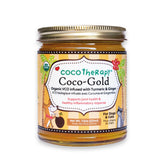
At CocoTherapy, we offer both whole virgin coconut oil and concentrated MCT oil because they serve different nutritional purposes.
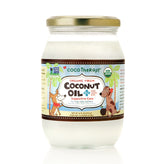
CocoTherapy Organic Virgin Coconut Oil contains one ingredient: 100% organic virgin coconut oil. Our coconuts are grown on our family’s USDA-certified organic farm in the Philippines, harvested at peak maturity, and processed from fresh coconut meat.
The oil is raw, unrefined, and cold-pressed without hexane, chemical solvents, bleaching, or hydrogenation. It keeps the naturally broad fatty-acid profile of whole coconut oil, making it an easy option for pet parents who want to include virgin coconut oil as part of an everyday wellness routine.
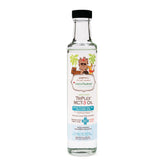
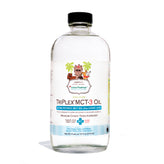
CocoTherapy TriPlex MCT-3 Oil takes a more concentrated approach. It provides caprylic acid, capric acid, and lauric acid, giving your pet C8, C10, and C12 in one coconut-derived MCT blend.
Many MCT products concentrate mainly on C8 and C10. TriPlex also retains C12, creating a broader fatty-acid profile while still providing concentrated medium-chain fats.
Which one makes the most sense depends on what you’re trying to add to the diet. Whole virgin coconut oil offers versatility, while TriPlex provides a more concentrated way to include coconut-derived MCTs.
How Can You Use Coconut Oil Without Adding Too Many Calories?
Coconut oil and MCT oil can fit comfortably into a healthy routine when you treat them as part of the diet rather than something extra that doesn’t count. A few simple habits can make all the difference:
- Start with a purpose. Decide what you want the oil to add to your pet’s routine before choosing a product. Whole virgin coconut oil and concentrated MCT oil have different fatty-acid profiles, so knowing your goal makes the choice much more straightforward. It also helps prevent adding supplements simply because they sound healthy.
- Begin with a small amount. Introduce any added oil gradually so your pet’s digestive system has time to adjust. Increasing too quickly can lead to loose stool or digestive discomfort. Starting slowly also gives you time to see how well the oil fits into the rest of the diet.
- Count the calories. Oils pack a lot of energy into a small amount, so include those calories when you think about your pet’s daily intake. If weight management is a goal, you may need to adjust calories elsewhere rather than simply pouring oil on top of the usual meal. Your pet still gets the nutritional addition without quietly pushing the total amount of food energy too high.
- Look at body condition. A scale is useful, but it can’t tell you how much of your pet’s weight comes from fat or lean tissue. Pay attention to waist shape, how easily you can feel the ribs, muscle condition, and changes in activity. Your vet can also show you how to use a body-condition score at home.
- Keep your pet moving. Regular activity helps maintain lean muscle and gives the body somewhere useful to put dietary energy. The right amount will depend on your pet’s age, mobility, health, and personality. A consistent routine usually matters more than trying to make every walk or play session intense.
- Watch the whole diet. Treats, chews, table scraps, toppers, oils, and supplements can add more calories than you might expect by the end of the day. Looking at everything your furry friend eats gives you a much more accurate picture than focusing on their main food alone. It also makes it easier to decide where coconut oil or MCT oil fits.
- Ask your veterinarian when needed. If your pet has diabetes, pancreatitis, excess weight, or another metabolic or endocrine condition, get individual guidance before changing their dietary fat intake. These pets may have nutritional needs that differ from those of a healthy dog or cat. A tailored feeding plan can help you use supportive ingredients without working against their medical care.
If you’re introducing coconut oil for the first time, our guide to using coconut oil can help you work it into the routine gradually.
Can Coconut Oil Support a Healthier Metabolism?
Research gives us good reason to look beyond the idea that all dietary fats affect the body in the same way. MCTs and virgin coconut oil have produced encouraging findings around body composition, glucose regulation, insulin sensitivity, and the way energy is used in several animal studies.
Coconut oil still contributes calories, so the amount matters, especially for pets that need to maintain or lose weight. When it fits properly into the diet, though, high-quality coconut oil or MCT oil can be a valuable part of a balanced routine that also includes appropriate portions, regular movement, and good overall nutrition.
For pet parents, that’s really the useful takeaway. Healthy weight and metabolism aren’t built around avoiding fat altogether. They’re about choosing the right foods, using them in sensible amounts, and looking at how the whole routine supports your furry friend over time.