


















Fat has had a rough reputation for a long time. It’s often linked with weight gain, greasy foods, and poor health, so it’s easy to see why many pet parents assume that less fat must always be better. But fat is an essential part of your pet’s diet, and the body relies on it for many important functions every single day.
A lot of the confusion comes from talking about “fat” as though it’s one single thing. In reality, different fats contain different fatty acids, and those fatty acids can be digested, absorbed, and used in very different ways. Once you start looking a little closer, the whole subject becomes much more interesting.
In this post, we’ll look at what dietary fat actually does and why different fats behave differently in the body. Plus, we’ll take a look at what research on MCTs and coconut-derived fats can teach us about this often-misunderstood macronutrient.
Why Has Fat Been Blamed for So Many Health Problems?
There’s a pretty straightforward reason fat became closely associated with weight gain: it’s calorie-dense. Fat provides more calories per gram than protein or carbohydrates, so adding too much can quickly raise the total calorie content of your pet’s diet.
The tricky part is that dietary fat and stored body fat are two different things. Body weight is strongly influenced by overall energy balance, and pets can gain excess body fat when they regularly consume more calories than their bodies use, regardless of which macronutrient those calories come from.
Of course, serving size still matters. Oils and other fat-rich foods can add a lot of energy in a small amount, so it’s easy for those extra calories to sneak up on your pet. But describing dietary fat as simply “fattening” leaves out the much more interesting question of how different fatty acids are metabolized and used.
Research into coconut-derived fats helps make this clearer. Medium-chain fats can influence energy metabolism differently from many longer-chain fats, which gives us a good reason to look beyond the calorie count alone. We’ve explored the research on coconut oil and metabolism if you want to dive deeper.

What Does Fat Actually Do in Your Pet’s Body?
Your pet’s body has plenty of jobs for dietary fat, and storing energy for later is only one of them. Fat provides a concentrated energy source and supplies fatty acids that support normal cell function, healthy skin and coat, and signaling processes throughout the body.
Dietary fat also helps with the absorption and transport of fat-soluble vitamins, including vitamins A, D, E, and K. So, the fats in your pet’s diet can influence how effectively the body uses some of the nutrients already present in food. You can read more about nutrient absorption in our previous post.
With all of these jobs to do, fat deserves a little more credit than it usually gets. A balanced diet needs to provide appropriate amounts and types of fat based on the individual pet’s nutritional needs, rather than simply pushing fat intake as low as possible.
Why Saying “Fat” Doesn’t Tell You the Whole Story
If you’ve ever looked at two different oils and wondered whether they’re basically doing the same thing, this is where the details matter.
Most dietary fat is present as triglycerides, which consist of three fatty acids attached to a glycerol backbone. Those fatty acids can differ in several important ways, including their chain length and level of saturation.
Those differences can affect the metabolic pathways they follow once your pet eats them. As a result, two oils can provide a similar number of calories while having very different fatty-acid profiles and nutritional uses.
Fish oil, for example, is valued largely for long-chain omega-3 fatty acids such as EPA and DHA, while coconut oil contains fatty acids such as caprylic acid, capric acid, and lauric acid. That’s quite a difference hiding behind the simple word “oil.”
Each type has its own nutritional characteristics, so it’s helpful to consider what a particular fat provides and why you’re using it. Our comparison of fish oil and coconut oil goes into these differences in more detail.
Saturated Fat Isn’t One Single Thing
“Saturated fat” is another broad label that can make things sound simpler than they really are. The term describes part of a fatty acid’s chemical structure, but it doesn’t tell you its chain length or exactly how your pet’s body will digest and use it.
Coconut oil is a useful example because it contains several saturated fatty acids with different chain lengths. Caprylic acid, or C8, has an eight-carbon chain, capric acid, or C10, has ten carbons, and lauric acid, or C12, has twelve.
A few carbon atoms may not sound like a big deal, but chain length can influence digestion, absorption, transport, and metabolism. Looking beyond the blanket term “saturated fat” gives you a much clearer idea of what a particular fat might actually do in your pet’s body.
What Makes Medium-Chain Fats Different?
Medium-chain triglycerides (MCTs) have attracted plenty of research interest because the body handles them differently from many longer-chain fats.
C8 and C10 are absorbed relatively quickly and transported to the liver, where they can be used for energy. The liver can also convert some of these fatty acids into ketones, which provide another fuel source for tissues throughout the body, including the brain.
This gets especially interesting as dogs get older. The aging brain may become less efficient at using glucose, so researchers have explored whether ketones produced from MCTs can provide another usable source of energy for brain cells.
Lauric acid, or C12, deserves some attention too. It’s commonly grouped with medium-chain fatty acids (MCFAs), but it has different metabolic characteristics from the shorter C8 and C10 fats. Those differences help explain why whole coconut oil and concentrated MCT oil have different fatty-acid profiles and uses.
If all of those Cs and numbers are starting to blur together, our guide to coconut oil and MCT oil explains the differences in more detail.
What Does the Research Tell Us About How Fat Can Affect the Body?
This is where the idea that “fat is just fat” really starts to fall apart. Veterinary research into MCTs gives us a useful look at how specific dietary fats can affect the body in ways that extend beyond their calorie content.
There’s one detail worth keeping in mind as we look at the studies. Research formulas can vary considerably, so the exact fat being tested matters. Studies using purified or concentrated MCTs provide evidence about those particular fatty-acid blends, while studies using whole virgin coconut oil (VCO) tell us about a different type of fat with a broader fatty-acid profile.
MCTs Can Provide the Aging Brain with Another Energy Source
One of the best-known canine studies looked at aged Beagles fed either a control diet or a diet containing 5.5% MCTs for eight months.
The researchers found that dogs receiving the MCT diet performed better on several cognitive tasks. They also had higher levels of beta-hydroxybutyrate, a ketone body, which supported the idea that dietary MCTs could provide the aging brain with another source of energy. The full findings are available in this 2010 study.
Another clinical study looked at 87 pet dogs showing signs of canine cognitive dysfunction. Dogs received either a control diet or diets containing MCT oil along with a broader brain-support nutrient blend, and improvements were reported in several categories of cognitive dysfunction. Because the diets differed in more than one way, the results reflect the complete dietary intervention rather than MCTs alone.
More recent research has taken a wider look at what happens in the body after MCT intake. A 2024 study examined the serum metabolome of young adult and senior dogs eating an MCT-enriched diet and found changes in ketone bodies, circulating lipids, and other metabolites. This gives us another example of how an MCT-enriched diet can influence systemic metabolic markers.
Studies in Dogs with Epilepsy Show the Same Principle
MCT research isn’t limited to healthy aging. Researchers have also studied MCT supplementation in dogs with epilepsy, giving us another look at how these fats may influence energy metabolism and brain function.
In one randomized, double-blinded crossover trial, dogs received either MCT oil or a control oil during different periods of the study. While receiving MCT oil, dogs showed improvements in spatial working memory and problem-solving, and pet parents also reported better trainability. Twenty-nine dogs completed the 2021 epilepsy study.
Because the study involved dogs with epilepsy, the findings relate to that specific group and shouldn’t automatically be applied to every dog. Even so, the research adds another useful piece to the puzzle by showing how a particular type of dietary fat can interact with brain energy metabolism in measurable ways.
Virgin Coconut Oil Has Also Been Studied in Digestive Health
Whole VCO has been studied separately from concentrated MCT formulas, including research involving dogs with chronic digestive problems.
A 2023 study followed 18 dogs with chronic enteropathy. The dogs first received a home-cooked diet, and VCO was later included at 10% of metabolizable energy.
The dogs improved clinically during the overall dietary program, while stool consistency improved during the VCO phase. The researchers also found different changes in fecal fatty acids and sterols after the home-cooked diet and after VCO was added.
Because the dogs’ overall diet changed as part of the study, the results can’t be attributed solely to virgin coconut oil. Still, the findings add to our understanding of how the type of dietary fat may influence digestive and metabolic processes.
Does Eating More Healthy Fat Mean More Is Better?
Once you hear about all the useful things fats can do, it can be tempting to think that adding more must be a good idea. With fat, though, serving size still deserves plenty of attention.
Fat is calorie-dense, so adding several spoonfuls of oil to an already complete diet can push your pet’s calorie intake higher than intended. Those extra spoonfuls may not look like much in the bowl, but they can add up quickly.
The appropriate amount depends on the individual pet, including their body condition, activity level, age, current diet, digestive tolerance, and health history. Even two dogs of similar size can have very different energy needs.
Some pets also need special consideration around dietary fat. If your dog or cat has pancreatitis, another digestive condition, a medically restricted diet, or a known problem tolerating fat, talk with your vet before adding a new oil.
The best approach is to keep the whole diet in mind and choose an amount that supports your pet’s nutritional needs without pushing their calorie intake higher than it needs to be.
How Can You Evaluate a Fat Source for Your Pet?
A label that simply says “fat” or “oil” doesn’t tell you very much. Before adding a new fat to your pet’s routine, take a closer look at what you’re actually buying and what you want it to provide.
- Look at the fatty acids. Different fatty acids can serve very different purposes in the body. An oil rich in EPA and DHA has a different nutritional profile from one rich in C8, C10, or C12, even though both are sources of fat.
- Consider the source. Where an oil comes from and how it’s processed can affect quality and freshness. If you’re shopping for coconut oil, our guide to choosing coconut oil explains what to look for.
- Match the fat to the goal. Think about the nutritional reason you’re adding an oil, such as providing omega-3 fatty acids or increasing the amount of MCFAs in the diet. Having a clear purpose makes it easier to choose a suitable option.
- Count the calories. Oils can add a lot of energy in a small serving. Those calories should be considered alongside the rest of your pet’s daily food, especially if weight management is important.
- Introduce it gradually. A sudden increase in dietary fat may lead to loose stool or digestive upset in some pets. Starting with a small amount gives the digestive system time to adjust and makes tolerance easier to monitor.
- Pay attention to the individual pet. Age, activity, health history, digestion, and overall diet can all affect whether a particular fat is a good choice. The same serving or product won’t necessarily suit every dog or cat equally well.
How Are Coconut Oil and MCT Oil Different?
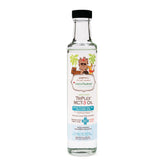
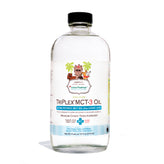
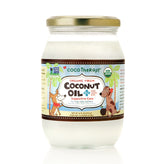
If you’ve ever compared CocoTherapy Organic Virgin Coconut Oil and TriPlex MCT-3 Oil and wondered why you might choose one over the other, the fatty-acid profile is a great place to start.
CocoTherapy Organic Virgin Coconut Oil and TriPlex MCT-3 Oil are both coconut-derived, but their fatty-acid profiles differ considerably.
Whole virgin coconut oil naturally contains a broad range of coconut fatty acids and is particularly rich in lauric acid. CocoTherapy Organic Virgin Coconut Oil, for example, contains approximately 12% C8, 7% C10, and 53% C12, along with the other fatty acids naturally found in coconut oil.
A concentrated MCT oil contains much larger proportions of selected medium-chain fatty acids. CocoTherapy TriPlex MCT-3 Oil contains approximately 53% C8, 35.6% C10, and 11.4% C12. Its higher concentration of C8 and C10 provides more of the shorter MCTs commonly studied in relation to ketone production and energy metabolism.
Those differences also matter when you’re reading about research. Scientific studies use specific fatty-acid combinations, concentrations, and serving amounts, so the results from one research formula shouldn’t automatically be applied to another type of coconut-derived oil.
For pet parents choosing between the two, looking at the fatty-acid profile, intended use, and individual pet gives you a much more useful starting point than simply seeing that both products come from coconuts.
So, Is Fat Really Something Pet Parents Should Fear?
Fat has spent a long time playing the nutritional bad guy, but much of that reputation comes from squeezing a complicated group of nutrients into one broad category. Dietary fats can contain very different fatty acids, and those differences can influence how they’re digested, absorbed, metabolized, and used throughout the body.
So, the next time you see “fat” on a label, take a closer look. Which fatty acids does it provide? How much are you feeding? What role does it play in the rest of your pet’s diet? Asking those questions gives you a much clearer and more useful way to think about this essential macronutrient.